
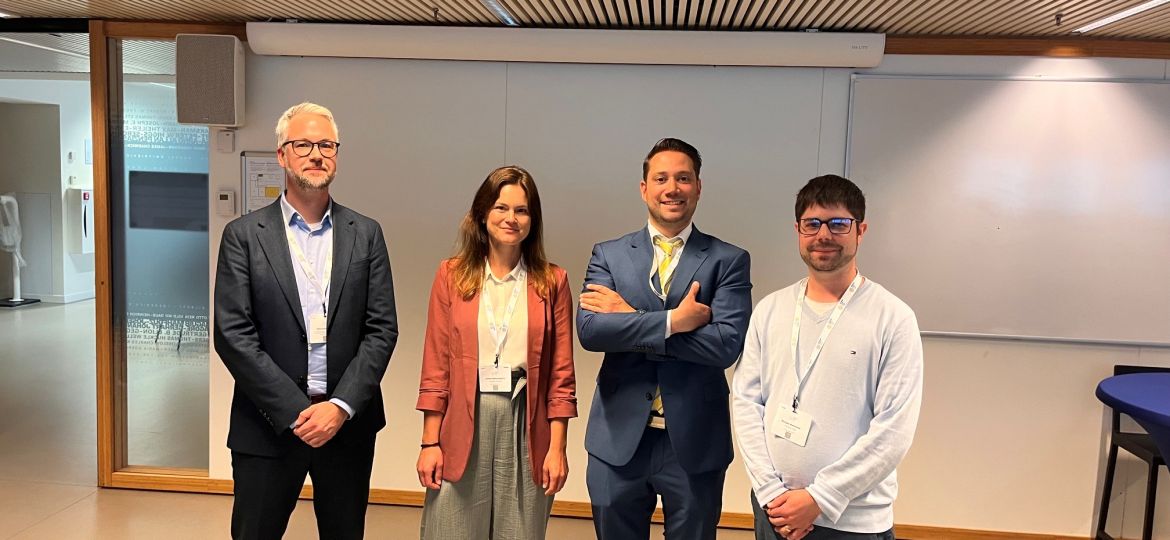
The DARE project participated in the International Conference on Information Systems for Crisis Response and Management (ISCRAM 2026), contributing to discussions on how multi-stakeholder collaboration can strengthen crisis preparedness and response.
As part of the conference programme, DARE had the privilege of chairing the track “The Role of Multi-Stakeholder Platforms in Crisis.” The track brought together research examining one of the most significant challenges facing contemporary crisis management: the need for diverse actors to coordinate effectively in increasingly complex and interconnected crisis environments.
The presented papers highlighted the importance of collaboration between civil protection authorities, emergency services, public administrations, military organisations, critical infrastructure providers, and local communities. Across the contributions, three key themes emerged.
Strengthening Civil-Military Coordination
One paper examined the use of structured 9-Liner MedEvac request chats between military and civilian units. The research demonstrated how clear and standardised communication channels can support rapid decision-making and facilitate time-critical medical evacuation processes across organisational boundaries.
Addressing the Organisational Dimension of Preparedness
Another contribution focused on cross-sectoral crisis preparedness and response. The findings emphasised that successful collaboration depends not only on technology but also on clearly defined roles, responsibilities, organisational routines, and governance structures that enable actors to work together under uncertain conditions.
Enabling Coordination Through Shared Information Systems
A third paper presented ZIFA, a central information system for civil protection vehicles and equipment. The study illustrated how reliable, accessible, and up-to-date information on available resources can support operational coordination before, during, and after crisis events.
Relevance for the DARE Project
The discussions and findings presented during the track closely align with DARE’s objectives. The project focuses on enhancing disaster resilience through improved preparedness, situational awareness, interoperability, and cooperation among stakeholders involved in crisis management and emergency response.
A central message emerging from the track was that multi-stakeholder platforms should be viewed as more than technical solutions. They function as coordination infrastructures that help organisations communicate across institutional boundaries, understand available resources, and develop a shared operational picture necessary for effective crisis response.
The presentations also reinforced an important principle for disaster resilience: preparedness is built long before a crisis occurs. Trusted platforms, established practices, and strong partnerships form the foundation for coordinated action when emergencies arise.
DARE will continue to contribute to advancing knowledge and practical solutions that strengthen cooperation, interoperability, and resilience across the European crisis management community.
